
A Wonderful Day in Nanjing: Where History Whispers and Joy Blooms
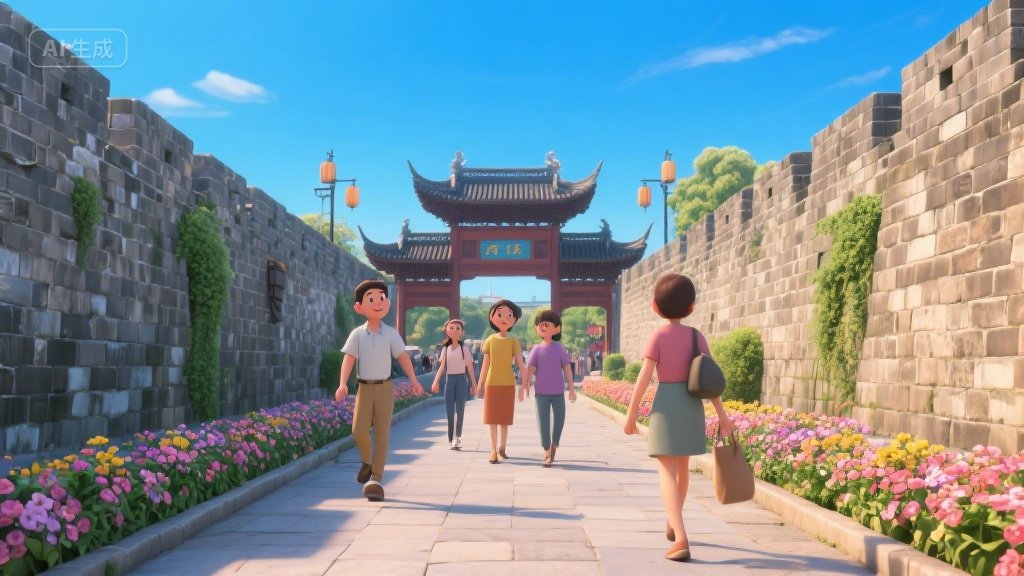
As the first streak of golden sunlight spills over the ancient city walls of Nanjing, painting the sky in soft hues of amber and rose, I step onto the cobblestone streets with a heart brimming with anticipation. Known as “Jinling” in ancient times, this city of six dynasties carries a legacy that stretches back over 2,500 years—a tapestry woven with imperial grandeur, poetic romance, and quiet resilience. Today is not just a day of sightseeing; it is a journey through time, a celebration of culture, and an immersion into the warm, vibrant soul of Nanjing. From the mist-shrouded lakes to the bustling food alleys, from the solemn memorials to the lively markets, every corner of this city promises a moment of wonder. This is my story of a wonderful day in Nanjing, where history whispers in the breeze and joy blooms at every turn.
Dawn at Xuanwu Lake: Serenity by the Water
My day begins at 6:30 a.m., as the city stirs awake from its slumber. I make my way to Xuanwu Lake, one of Nanjing’s most cherished natural gems, located just north of the Purple Mountain. The lake, spanning over 30 square kilometers, is surrounded by willow trees that sway gently in the morning breeze, their slender branches brushing the calm, mirror-like water. As I walk along the lakeside path, the air is fresh and crisp, carrying the faint scent of osmanthus and lotus—flowers that have long been associated with Nanjing’s beauty.
A group of elderly locals practice tai chi by the water’s edge, their movements slow and graceful, synchronized with the rhythm of the dawn. Nearby, a few fishermen cast their nets, their silhouettes outlined against the glowing sky. I find a wooden bench beneath a willow tree and sit for a while, drinking in the tranquility. The only sounds are the rustle of leaves, the lapping of water against the shore, and the distant chirping of birds. It is a moment of pure peace, a reminder of the beauty that exists in stillness.
As the sun climbs higher, the lake comes alive with activity. Families rent paddle boats and glide across the water, laughter echoing through the air. Couples stroll hand in hand, pausing to take photos with the lake and the distant Purple Mountain as their backdrop. I decide to rent a bike and cycle along the lakeside trail, which winds its way around the lake and offers stunning views at every bend. Along the way, I pass by small gardens filled with peonies and chrysanthemums, and marble pavilions where visitors sit to rest and chat. The trail is lined with street vendors selling fresh fruit, local snacks, and cold drinks, adding to the lively yet relaxed atmosphere.
By 8:30 a.m., I reach the north gate of Xuanwu Lake Park, where a bustling morning market has set up. Vendors sell everything from fresh vegetables and seafood to handmade crafts and traditional Chinese medicines. The air is filled with the aroma of steamed buns, fried dough sticks, and soybean milk—breakfast staples for locals. I stop at a small stall and order a bowl of “youtiao” (fried dough sticks) and a cup of “doujiang” (soybean milk), savoring the simple yet delicious flavors. The youtiao is crispy on the outside and soft on the inside, and the doujiang is creamy and slightly sweet. It is the perfect way to fuel up for the day ahead.
Morning at the Presidential Palace: Walking Through History
After breakfast, I head to the Presidential Palace, a landmark that bears witness to China’s modern history. Located in the heart of Nanjing, the Presidential Palace served as the office and residence of Sun Yat-sen, the founding father of the Republic of China, and later as the headquarters of Chiang Kai-shek’s Nationalist government. The complex covers an area of over 90,000 square meters, combining Chinese and Western architectural styles, and is surrounded by lush gardens and tranquil courtyards.
As I enter through the main gate, I am struck by the grandeur of the buildings. The first courtyard is lined with ancient cypress trees, their gnarled trunks reaching towards the sky, and stone lions stand guard at the entrance to the main hall. The main hall, with its red pillars and golden roof tiles, is a masterpiece of traditional Chinese architecture, while the western-style buildings to the north reflect the influence of Western culture during the early 20th century.
I wander through the various halls and rooms, each filled with historical artifacts, photographs, and documents that tell the story of China’s turbulent past. In the Office of the President, I see the desk where Chiang Kai-shek once worked, surrounded by vintage telephones, typewriters, and maps. In the Reception Hall, I admire the intricate carvings and paintings on the walls and ceiling, which depict scenes from Chinese history and mythology. The gardens are equally impressive, with winding paths, lotus ponds, and rock formations that create a sense of harmony and serenity. I sit on a stone bench in the garden and imagine what life must have been like here a century ago—filled with political intrigue, revolutionary ideals, and the weight of history.
By 11:00 a.m., I make my way to the eastern part of the Presidential Palace, where the former residence of Sun Yat-sen is located. The residence is a simple yet elegant building, with wooden floors, paper windows, and a small courtyard. Inside, I see Sun Yat-sen’s bedroom, study, and living room, all preserved as they were during his lifetime. The room is filled with books, including many on Western philosophy and politics, which reflect Sun Yat-sen’s vision for a modern, democratic China. I am deeply moved by the display of his personal belongings—a worn leather suitcase, a pair of glasses, and a handwritten draft of his famous “Three Principles of the People.” It is a powerful reminder of the courage and dedication of those who fought for change.
Before leaving the Presidential Palace, I stop at the gift shop and buy a book about Nanjing’s history, as well as a small souvenir—an engraved wooden fan with a painting of the Presidential Palace. As I walk out of the gate, I look back at the complex, feeling a deep sense of respect for the history that unfolded here. It is a place that teaches us about the past, inspires us to cherish the present, and encourages us to work towards a better future.
Lunch at Laomendong: Savoring Nanjing’s Culinary Delights
By noon, my stomach is growling, and I head to Laomendong, a historic district known for its traditional architecture and delicious street food. Laomendong, which translates to “Old East Gate,” was once a bustling commercial area during the Ming and Qing dynasties. Today, it has been restored to its former glory, with ancient buildings, stone archways, and cobblestone streets that transport visitors back in time.
As I enter Laomendong, I am greeted by the aroma of food—sweet, savory, spicy, and everything in between. The streets are lined with food stalls and restaurants, each offering a unique taste of Nanjing’s culinary heritage. I decide to try some of the city’s most famous dishes, starting with “duck blood vermicelli soup” (duck blood 粉丝汤), a Nanjing specialty that has been enjoyed for centuries.
I stop at a small restaurant with a long line of locals, a sign that the food is authentic and delicious. The duck blood vermicelli soup is served in a large bowl, filled with tender duck blood, chewy vermicelli, pieces of duck meat, tofu puffs, and green onions, all swimming in a rich, flavorful broth. I take a sip of the broth first—it is savory and slightly spicy, with a hint of star anise and cinnamon. The duck blood is silky smooth, and the vermicelli is perfectly cooked, absorbing the flavor of the broth. It is warm, comforting, and absolutely delicious.
Next, I try “salted duck” (盐水鸭), another iconic Nanjing dish. The duck is marinated in a mixture of salt, ginger, and star anise for several hours, resulting in tender, juicy meat with a savory, slightly salty flavor. I eat it with a side of steamed buns, which soak up the delicious juices. The salted duck is so flavorful that I can’t help but go back for seconds.
After finishing my main course, I indulge in some desserts. I try “sesame cakes” (芝麻糕), which are crispy on the outside and soft on the inside, filled with sweet sesame paste. I also try “lotus seed paste cakes” (莲子糕), which are delicate and fragrant, with a sweet, nutty flavor. As I eat, I watch the world go by—locals chatting with friends, children running around, and tourists taking photos of the ancient buildings. The atmosphere is lively and friendly, and I feel a sense of belonging, even as a stranger in the city.
By 1:30 p.m., I have finished my lunch and decide to explore more of Laomendong. I wander through the narrow streets, admiring the traditional courtyard houses, which are decorated with red lanterns and flower baskets. I visit a small museum dedicated to Nanjing’s folk art, where I see exhibits of paper cutting, jade carving, and woodblock printing. I also stop at a tea house and order a cup of “biluochun” (碧螺春), a famous green tea from Jiangsu Province. The tea is fragrant and refreshing, and I sit by the window, enjoying the view of the street below.
Afternoon at Dr. Sun Yat-sen Mausoleum: A Tribute to a Visionary
In the early afternoon, I make my way to Dr. Sun Yat-sen Mausoleum, located at the southern foot of the Purple Mountain. The mausoleum is a magnificent memorial to Sun Yat-sen, who devoted his life to overthrowing the Qing Dynasty and building a democratic China. It is one of the most important historical sites in China and a symbol of national unity and progress.
The mausoleum is approached via a long, wide staircase with 392 steps, which represents the number of seats in the National Assembly during the early Republic of China. As I climb the steps, I am surrounded by lush green trees and shrubs, and the air is filled with the scent of pine and cedar. The staircase is lined with stone balustrades, and at the top, I am rewarded with a stunning view of the mausoleum’s main hall, which is built in the style of a traditional Chinese palace, with a blue-tiled roof and white marble columns.
The main hall, known as the “Memorial Hall,” houses a large statue of Sun Yat-sen, seated in a chair with a serious yet compassionate expression. The statue is made of white marble and stands over 5 meters tall, and it is surrounded by murals depicting important events in Sun Yat-sen’s life, such as his return to China from overseas and his swearing-in as provisional president. Behind the statue is a door leading to the tomb chamber, where Sun Yat-sen’s coffin is laid to rest. The tomb chamber is a circular room with a domed ceiling, and the walls are lined with black marble. It is a solemn and respectful place, and visitors speak in hushed tones as they pay their respects.
After visiting the tomb chamber, I walk around the mausoleum’s grounds, which are beautifully landscaped with gardens, ponds, and pavilions. I stop at the “Music Stage,” a circular platform where musicians once performed in honor of Sun Yat-sen. The stage is surrounded by columns and has a roof decorated with intricate carvings. I also visit the “Sun Yat-sen Memorial Hall,” which houses a collection of artifacts and exhibits about Sun Yat-sen’s life and work, including his personal belongings, letters, and photographs.
By 3:30 p.m., I make my way to the top of the Purple Mountain, where I can enjoy a